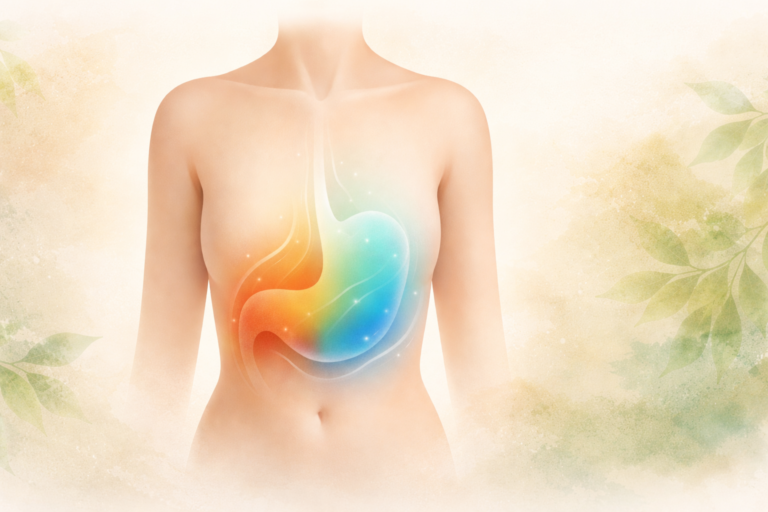

“Healing isn’t a rescue mission; it’s a rhythm.”
The Roots Create The Fruits
I’ve had two long-term love relationships. And although Love was undeniably present in both, neither of them worked out. We shared our lives fully — cooking, laughing, adventuring, building a home together — so a weekly Date Night never seemed necessary. We never created a dedicated space for open, vulnerable communication. So when things eventually went sideways and we tried to fix it, it was already too late. No amount of counselling, praying, reading or trying could repair something whose roots had quietly weakened over time.
Just like any living system, relationships don’t collapse suddenly — the collapse is simply the final visible expression of what’s been happening underground.
In life, we can wait until something goes wrong and then scramble to fix the symptoms, OR we can tend to the roots consistently so the system remains strong in the face of inevitable storms.
Today, we go deeper into how Ayurveda strengthens our roots — our digestion, our rhythms, our mental climate — so the “fruits” of our life (health, energy, clarity, resilience) can flourish naturally.
Core Principles of Living Ayurveda & a Balanced Inner Climate
In its truest sense, Ayurveda is Yoga — the alignment of Body, Mind, Spirit, Earth and the subtle forces that shape our Being. Ayurveda reconnects us with our natural rhythms and the intelligence of the Earth. It is far more than powders, pills or turmeric products — a consumer culture that has unfortunately collapsed 5000 years of profound wisdom into commodities.
The Five Elements
Ayurveda recognises that everything — living and nonliving — is composed of the Five Natural Elements. Humans are no exception.
- Earth — stability and grounding
- Water — flow and fluidity
- Fire — transformation and digestion
- Air — movement and communication
- Ether (space) — expansion and spaciousness
The Three Doshas: Vata, Pitta, Kapha
The five elements combine into three governing forces — the doshas — which shape our physical, emotional and mental tendencies:
- Vata (Air + Ether) — movement, creativity
- Pitta (Fire + Water) — digestion, metabolism, insight
- Kapha (Earth + Water) — structure, steadiness, nourishment
Each of us is born with a unique combination of these energies (our prakriti). But life — seasons, stress, experiences, diet, environment — shifts us away from our original balance (our vikriti).
Just like a rose garden, every rose is unique, yet all roses still belong to a family with shared tendencies. A gardener tends to each flower individually and to the ecosystem as a whole. We are no different.
Over time, environmental pressures create subtle imbalances in our inner climate. Ayurveda teaches that imbalance — not symptoms — is the true beginning of illness and distress.
So the first step is knowing our doshas — our birth nature and our current state — so we can see clearly where our imbalance lies. Ayurveda offers precise lifestyle tools to return us to centre, beginning with Right Digestion.
And here’s the magic: every food, spice, grain, herb, and ingredient has its own doshic effect. Through our food choices, we can aggravate or soothe these energies — meaning we can influence our balance daily, gently, and naturally.
Why an Ayurvedic Lifestyle Matters Today
We are living in a world of chronic stress, digestive disorders, burnout and lifestyle-driven illnesses. Quick fixes, supplements and constant stimulation are rising — but our wellbeing is not.
Ayurveda acknowledges symptoms but does not chase them. It guides us to the roots, not merely the fruits, helping us understand the deeper causes of imbalance — physical, emotional, environmental, and societal.
A tree with strong roots bears healthy fruits. Ayurveda strengthens our roots.
What Goes on Underground
Just because we can’t see something doesn’t mean it isn’t happening. Growth and decline both begin invisibly. Daily movement doesn’t show results immediately — but beneath the surface, change is taking place. Illness works the same way.
By the time we see the symptoms — fatigue, bloating, anxiety, dull skin, irregular digestion — the imbalance has already been forming for months or years.
Ayurveda helps us cultivate wellness at the subtle level, long before symptoms appear. It empowers rather than panics, nurtures rather than fixes.
Living Ayurveda In a Nutshell
A 5000-year-old living science cannot be summarised fully in one post, but we can look at the First Pillar: Right Digestion — the foundation of all balance.
- Reset your Digestion
Ayurveda begins with a gentle, tridoshic reset — a simple 3-day rhythm using a balanced dish prepared with medicinal spices and whole ingredients. It rests and resets the digestive fire, clears stagnation, and brings the system back toward centre. - Know your doshas — prakriti AND vikriti
This helps you see:
I. Your core nature — your physical and mental blueprint.
II. Where you are currently imbalanced — not compared to anyone else, but compared to yourself. - Gradually establish your rhythm
Ayurveda is integrated step by step. You don’t overhaul your life — you align with it.
Simple Small Steps to Begin Today
These simple steps can be integrated immediately, and unless you have specific chronic imbalances requiring deeper work, they often yield noticeable shifts after 7 days:
- First thing in the morning: soak 1 tsp each of coriander seeds, fennel seeds and cumin seeds in boiled water and drink as a tea
- Before every meal: breathe in for 4 seconds, hold for 4 seconds, breathe out for 4 seconds, say “thank you,” then take your first bite
- After each meal: repeat this breathing technique for 3 breaths before standing
- Take a 15-minute gentle walk after lunch
- Switch off all devices while eating
- Put your spoon or fork down between each mouthful
- For constipation: chew a coin-sized slice of fresh ginger with a pinch of rock salt before meals
Don’t forget to smile.
Don’t forget to breathe.
And always give yourself a hug — because you deserve it.
Conclusion
Ayurveda offers a lifestyle profoundly relevant to our times — one that builds resilience through digestion, rhythm, emotional grounding, and alignment with the Earth. It shifts us from symptom-chasing to root-nourishing. When we tend to our roots, the fruits of our life transform naturally.
Invitation
If something inside you softens or awakens as you read this — if you feel an inner yes calling you closer — I invite you to explore what your own body is asking for. You don’t need to commit to anything. Just begin with one step, one practice, one choice that honours your Root.
Further Reading
- Frawley, David. Ayurvedic Healing. 2nd ed., Lotus Press: Twin Lakes, WI, 2000
- Morrison, Judith H. The Book of Ayurveda: A Holistic Approach to Health and Longevity. New York: Simon & Schuster Inc., 1995,
- Lad, Vasant. Ayurveda: The Science of Self-Healing. Lotus Press: Santa Fe, 1984